Published 13 November 2026 | Source: Revolut research conducted by YouGov
Think about the last time you paid for something with a banknote. For a lot of people in the UAE, it takes a moment to remember. Coffee, groceries, taxis, even the barber: a tap of a card or a phone does the job.
A new survey commissioned by Revolut and carried out by YouGov puts numbers behind that feeling. It shows UAE residents trust digital payments almost across the board. It also shows where cash still refuses to leave, and that part matters just as much for anyone choosing a credit card.
Here is what the research found, and what it means for the card in your wallet.
The Cashless UAE in Numbers
The study surveyed more than 1,000 UAE residents. These are the headline findings:
| Finding | Share of respondents |
| Trust digital payments | 92% |
| Could not complete a purchase at least once because they had no cash | 73% |
| Aged 18 to 24 whose cash use stayed low or fell in the past 12 months | Around 73% |
| Withdraw cash to send money locally or abroad, to avoid higher remittance fees | Around 40% |
| Name inconvenient ATM locations as a pain point | 35% |
| Name ATM waiting times or queues as a pain point | 33% |
| Cash users who say some merchants or people only accept cash | 32% |
Younger Residents Are Leading the Shift
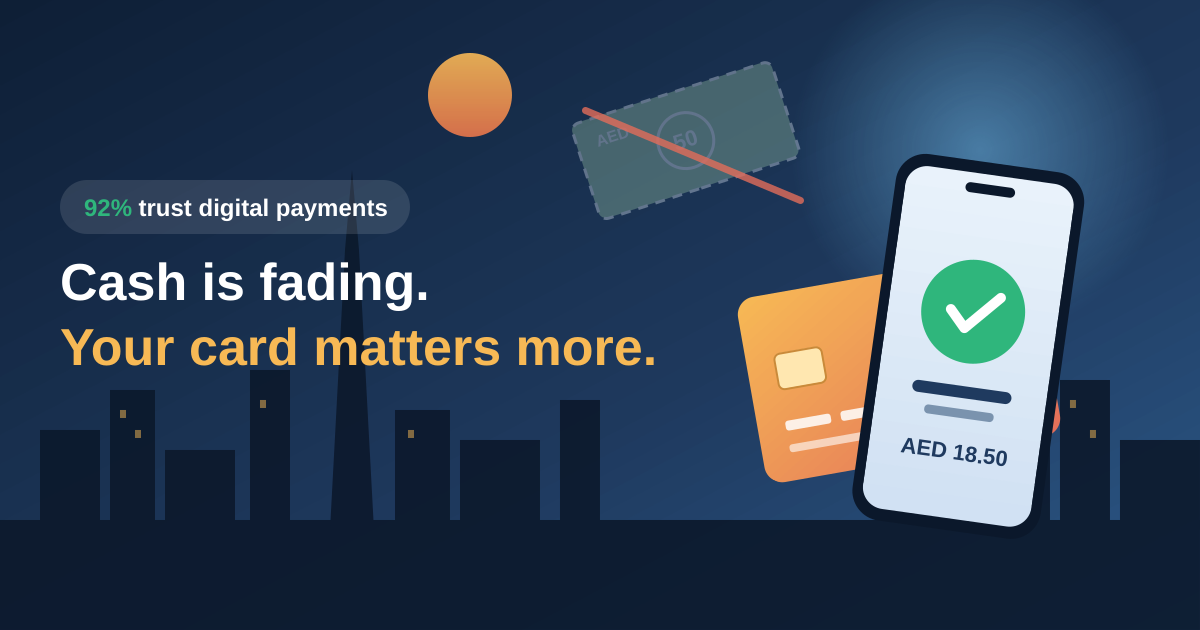
The clearest trend sits with the youngest adults. Most residents aged 18 to 24 usually carry AED 50 or less, and that includes people who carry no cash at all. Around 73% of this group say their cash use has stayed low or dropped over the last year.
For this generation, the wallet is mostly the phone. Payments run through Apple Pay, Google Pay or Samsung Pay, linked to a debit or credit card. That changes what a good card looks like: it needs to work smoothly in a mobile wallet and reward the small, frequent purchases that now make up most of daily spending.
Why People Are Leaving Cash Behind
Trust is only half the story. Cash is also simply annoying to get. More than a third of respondents (35%) say ATMs are in inconvenient places, and a third (33%) complain about waiting in line to withdraw money.
When paying by card is faster and getting cash takes effort, the choice makes itself. With 92% saying they trust digital payments, the UAE has a strong base for the next step.
Where Cash Still Holds On
The survey is honest about the gaps. Two stand out.
1. Sending money home
Around 40% of respondents take out cash to send money locally or internationally, to avoid higher remittance fees. For a country where so many residents support family abroad, this is a big share of everyday money movement still running on paper.
A quick word of caution for card users: sending money with a credit card is often treated as a cash advance. That usually means an upfront fee and interest from day one. Check your card terms before you use it for transfers.
2. Shops that only take cash
Nearly a third (32%) of people who still use cash say they do so because some merchants or individuals will not accept anything else. And 73% of all respondents have been unable to buy something at least once because they had no cash on them.
So the UAE is not fully cashless yet. Carrying a small amount for the corner shop or the car wash still makes sense.
What Revolut Says
Ambareen Musa, CEO of GCC at Revolut, said the UAE is already a global leader in digital innovation, and that this shows in how people manage and spend their money. She pointed to younger consumers growing comfortable with little or no cash, and said there is “a clear opportunity to make digital payments even more seamless” across everyday life.
What This Means for Your Credit Card
If most of your spending is now digital, your card is working harder than ever. That makes the choice of card more important, not less. A few things to look at:
- Rewards on everyday spend. Groceries, fuel, dining and online shopping are where cashless spending adds up. A card that pays cashback or points on these categories turns routine purchases into value.
- Mobile wallet support. Make sure your card works with the wallet on your phone, so you can leave the plastic at home too.
- Foreign transaction fees. If you shop on international websites or travel often, these fees quietly eat into your savings.
- Cash advance terms. If you ever withdraw cash or send money with your card, know the fee and the interest rate before you do.
- Annual fee versus real value. A card with a fee can still be the better deal if your spending earns more than it costs. The only way to know is to compare against how you actually spend.
Find the Card That Fits a Cashless Life
There are dozens of credit cards in the UAE, and each bank presents its own as the best. CardsMatcher compares them for you, based on your salary, your spending and what you want from a card.
Banks pay us nothing, so our matches answer to you, not to a commission. Fill in a short form and you will receive your personal card match within 3 business days.
Get your free card match at cardsmatcher.com. Want to know how we rank cards? Read our FAQ.
Frequently Asked Questions
Is the UAE becoming a cashless country?
It is moving in that direction. A 2026 YouGov survey for Revolut found 92% of UAE residents trust digital payments, and most adults aged 18 to 24 carry AED 50 or less. Cash is still used for remittances and at shops that do not accept cards.
Why do people in the UAE still use cash?
The main reasons in the survey were avoiding higher remittance fees when sending money (around 40%) and merchants or individuals who only accept cash (32% of cash users).
Can I use my credit card to send money abroad?
Often yes, but many banks treat it as a cash advance, which usually carries an upfront fee and immediate interest. Check your card terms first.
What is the best credit card for everyday digital spending in the UAE?
It depends on your salary and where you spend most. A cashback card often suits groceries and fuel, while a miles card may suit frequent travellers. CardsMatcher compares cards against your own spending and sends a personal match within 3 business days.
Sources
- Fintech News UAE, “Revolut Research Reveals Strong Consumer Confidence in UAE’s Cashless Future”, 13 November 2026: fintechnews.media/uae/2026/11/Revolut-Research-Reveals-Strong-Consumer-Confidence-in-UAEs-Cashless-Future
- Research commissioned by Revolut and conducted by YouGov among more than 1,000 UAE residents. The survey covered cash use, everyday payment preferences, trust in digital transactions and barriers to going cashless.
Note: this study was commissioned by a digital payments company. CardsMatcher has no commercial relationship with Revolut or YouGov.